

In France, according to the law, a baby's vision must be checked on the 8th day of life, at 9 months, and at 2 years. Any potential vision problems are then screened at school. It is necessary to perform these screenings from the child's first few months in order to treat and correct their vision disorders more easily.
Risk factors
It is important to consider the parents' various personal and family medical histories in order to better treat the child's vision problems.
Personal medical history:
- Prematurity, cerebral suffering
- Low birth weight (under 1500 g)
- Deafness
- Neuromotor disorders, cerebral palsy
- Chromosomal abnormalities (Down syndrome)
- Craniosynostoses, craniofacial dysostoses
- Embryofetopathies (toxoplasmosis, etc.)
- In utero exposure to cocaine, alcohol
Family medical history:
- Strabismus
Warning signs of a vision disorder
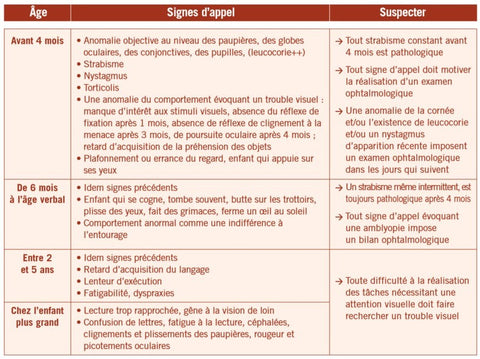
It is important to always pay attention to the presence of strabismus in a child, especially if the deviated eye is always the same. The treating physician will ensure that the necessary examinations are performed to best treat the child's vision and will advise a specialist if they cannot correct the present disorder alone.
The eye exam
To ensure the child is comfortable and to limit any stress, they will be seen in a calm atmosphere with soft lighting. If they are still young, they can sit on their accompanying person's lap during the test. This examination will help detect any potential vision problems and correct them as best as possible. Once the child is older and in school, they will need to undergo a color vision test at their doctor's office or during a visit from the school health service at their school.